
Artificial intelligence is no longer limited to apps and chatbots. In 2026, some of the most interesting AI products are physical devices designed to listen, see, record, summarize, translate, and assist without requiring you to constantly pull out your phone.
The category is still developing, so the useful AI gadgets are not necessarily the ones with the most futuristic marketing. The better products solve a specific problem and make AI accessible at the moment you actually need it.
Here are five AI gadgets worth knowing about in 2026.
1. Ray-Ban Meta Gen 2 Smart Glasses
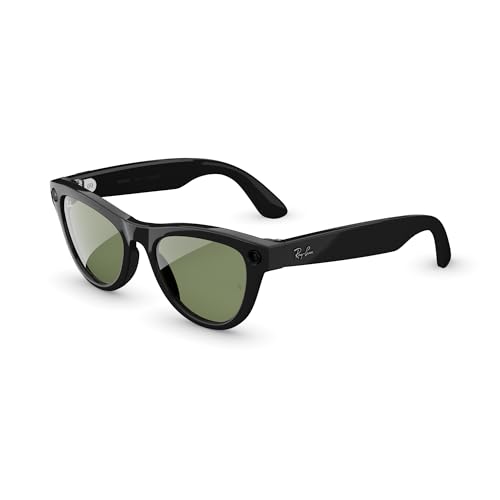
- #1 SELLING AI GLASSES – Tap into iconic style for men and women, and advanced technology with the newest generation of R…
- UP TO 8 HOURS OF BATTERY LIFE – On a full charge, these smart AI glasses can last 2x longer than previous generations, u…
- 3K ULTRA HD: RECORD SHARP VIDEOS WITH RICH DETAIL — Hands-free video recording with an ultra-wide 12 MP camera in up to …
Best for: Everyday AI assistance
Smart glasses have become one of the clearest examples of AI moving into everyday hardware. The Ray-Ban Meta Gen 2 combines a familiar glasses design with cameras, speakers, microphones, and Meta AI.
You can use them for hands-free questions, visual recognition, photos and video, calls, music, and other voice-controlled tasks. That makes them considerably more practical than a standalone AI gadget that requires learning an entirely new interface.
Tom’s Guide currently identifies the Ray-Ban Meta Gen 2 as its top choice for AI-focused smart glasses, while WIRED also features the Gen 2 prominently in its 2026 smart-glasses guide.
The important distinction is that these are primarily AI glasses rather than AR glasses. They do not try to turn your entire field of view into a digital display. Instead, AI, cameras and audio work in the background while the glasses still function like ordinary eyewear.
Why it stands out: It brings AI into a familiar product instead of making you carry another screen.
2. Plaud NotePin S

- Plaud Intelligence: Capture conversations in 112 languages and generate accurate transcripts with the Plaud App and Web….
- Multiple Ways To Wear With Included Accessories: Adapt Plaud NotePin S to any workflow instantly with four included acce…
- Enterprise-grade Privacy: Built to the highest standards with ISO 27001/27701, SOC 2, HIPAA, GDPR, and EN18031 complianc…
Best for: AI-powered notes and meetings
The Plaud NotePin S takes a different approach to AI hardware. Instead of trying to replace your smartphone, it acts as a wearable recorder that turns conversations into structured information.
It can record in-person conversations and send the audio to the Plaud ecosystem, where AI can generate transcripts, summaries and other outputs. Plaud says its platform supports transcription in 112 languages, speaker identification and customizable vocabulary.
The wearable format is the main attraction. You can attach it using a pin, clip, wristband or lanyard, allowing you to capture conversations without holding a recorder or constantly interacting with your phone.
There is an important limitation: the NotePin S is designed for in-person recording and does not record phone calls.
For meetings, interviews, brainstorming sessions and conversations where remembering every detail matters, that distinction makes it much more interesting than a conventional voice recorder.
Why it stands out: It turns spoken conversations into searchable, structured information instead of leaving you with hours of raw audio.
3. Omi

- IMPORTANT NOTE – STANDALONE WEARABLE: Package includes 1x Memoket Gem AI Voice Recorder and 1x Dedicated Wristband. Plea…
- SHARP SUMMARIES, READY TO SEND IN SECONDS: Every session is transcribed with high accuracy across 153 languages and proc…
- ALL-DAY COMFORT ON ITS OWN WRISTBAND: At just 0.4 oz (11 grams), lighter than four sugar cubes, Memoket Gem sits on a so…
Best for: Ambient AI assistance
Omi is built around the idea of an AI assistant that remembers what happens around you.
The device can capture conversations and connect them with the Omi app, where the system can create summaries, identify tasks and maintain searchable memories. Omi describes the product as a personal AI that listens to conversations, remembers them and turns them into actions.
Omi is particularly interesting because it represents a different direction for AI hardware. Rather than asking a chatbot a question every time you need something, the device attempts to build context from your interactions.
The Omi ecosystem also supports different hardware approaches, including the Omi wearable and Omi Glass. Omi Glass adds first-person audio and video capture to the platform.
That also makes privacy an important consideration. A device designed to continuously capture conversations requires users to think carefully about when recording is appropriate and whether other people are comfortable being recorded.
Why it stands out: It explores the idea of AI as a persistent memory and productivity layer rather than simply a chatbot.
4. Meta Ray-Ban Display
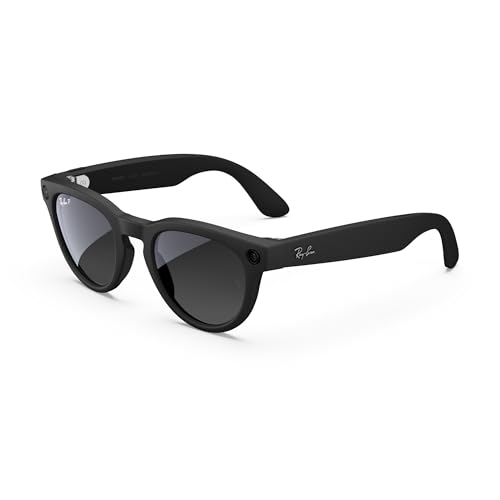
- #1 SELLING AI GLASSES – Tap into iconic style for men and women, and advanced technology with the newest generation of R…
- UP TO 8 HOURS OF BATTERY LIFE – On a full charge, these smart AI glasses can last 2x longer than previous generations, u…
- 3K ULTRA HD: RECORD SHARP VIDEOS WITH RICH DETAIL — Hands-free video recording with an ultra-wide 12 MP camera in up to …
Best for: AI glasses with a visual interface
If ordinary AI glasses are the beginning of the category, display-equipped glasses represent a more ambitious direction.
The Meta Ray-Ban Display combines AI assistance with an in-lens display and a Neural Band controller. Current 2026 reporting describes a color display integrated into one lens, along with camera-based AI features and gesture interaction through the wrist-worn controller.
This changes what smart glasses can do. Instead of hearing an answer through the speakers, a compatible experience can place information directly into your field of view.
The tradeoff is complexity. Display hardware, gesture controls and additional electronics make these considerably more specialized than standard Ray-Ban Meta glasses. The price is also substantially higher.
Why it stands out: It moves AI glasses from voice-and-camera assistants toward genuinely visual computing.
5. Snap Specs


Best for: Full AR and AI experimentation
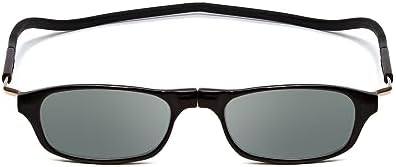
Snap Specs take the concept even further. Unlike conventional AI glasses, they are designed as standalone augmented-reality glasses with onboard processing, speakers, battery hardware and a waveguide display.
The 2026 Specs feature a wide field of view for digital overlays and support interaction through gestures and voice. Demonstrated applications include live language captions, measurements, spatial information and entertainment. Snap has also introduced Specs Intelligence, its AI assistant for the platform.
The technology is impressive, but these are not simply upgraded everyday sunglasses. The hardware is substantially more noticeable, battery life is a consideration, and the launch price is around $2,195.
That makes Snap Specs a very different proposition from the Ray-Ban Meta line. They are aimed at people interested in the future of spatial computing rather than shoppers simply looking for hands-free AI.
Why it stands out: It demonstrates what happens when AI, displays and augmented reality are combined into one wearable device.
What Makes a Good AI Gadget?
The biggest mistake when shopping for AI hardware is focusing only on the word “AI.”
A useful AI gadget should make something easier that would otherwise require your phone, computer or manual effort.
Look at these factors before buying:
AI functionality
Check what the device can actually do. Some gadgets use AI for transcription, while others provide visual recognition, translation, summaries or conversational assistance.
Hardware independence
Some AI devices are essentially accessories for your smartphone. Others perform more functions directly on the hardware.
Neither approach is automatically better. A lightweight companion device can be more convenient than trying to build an entire computer into a wearable.
Privacy
This matters particularly with cameras and microphones.
AI glasses and wearable recorders can capture information involving people who are not using the device. Check recording indicators, storage practices, account requirements and local recording laws before using these products around other people.
Battery life
AI features can consume considerably more power than conventional Bluetooth accessories because cameras, microphones, wireless connectivity and processing may all be active.
A device that sounds impressive but needs constant charging can quickly become inconvenient.
Subscription requirements
Some AI hardware relies on a companion subscription for advanced transcription, storage or AI processing.
Calculate the ongoing cost rather than looking only at the device’s purchase price.
Are AI Gadgets Worth Buying in 2026?
The answer depends heavily on the type of problem you want the gadget to solve.
AI glasses make sense when you want hands-free assistance, photography, audio and visual AI without constantly reaching for your phone. AI note-taking devices are more focused on conversations, meetings and productivity. AR glasses take the concept further by placing digital information directly into your view.
The important trend in 2026 is that AI hardware is becoming less about creating a separate “AI computer” and more about adding AI to products people already understand.
That is why glasses and compact recording devices are particularly interesting. They fit into existing behaviors rather than asking users to completely change how they interact with technology.
Final Thoughts
The best AI gadgets in 2026 are not necessarily the most futuristic ones. The more interesting products are those where AI genuinely improves the underlying device.
Ray-Ban Meta Gen 2 shows how AI can make everyday eyewear more useful. Plaud NotePin S turns conversations into searchable notes and summaries. Omi experiments with persistent AI memory, while Meta Ray-Ban Display and Snap Specs demonstrate where AI-powered visual computing could go next.
The category is still evolving, but 2026 is making one thing clear: AI is gradually moving from something we open on a screen to something built into the devices we already use.