HexClad cookware is built around a proposition that sounds almost too convenient: one pan that combines the familiar ease of nonstick cookware with some of the characteristics of stainless steel.
That positioning explains much of the brand’s popularity.
But premium cookware deserves a closer look than simply asking whether food sticks to the pan. Construction, heat management, cleaning, versatility, and long-term value all matter.
HexClad is particularly interesting because it does not try to replace stainless steel or traditional nonstick cookware outright. Instead, it sits somewhere between the two.


The HexClad Idea
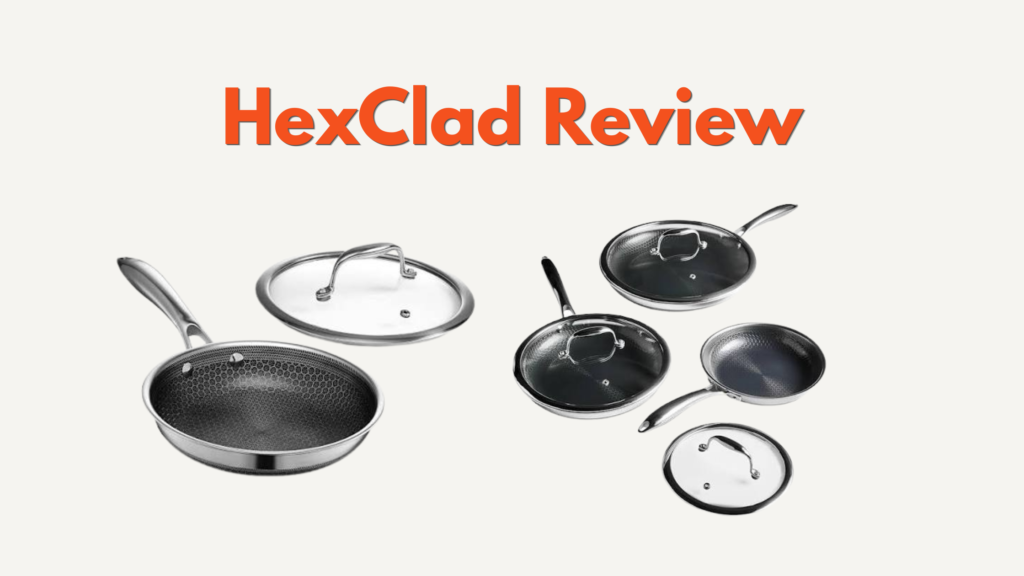
The defining feature of HexClad cookware is its hybrid cooking surface.
Rather than having a completely smooth nonstick interior, the pan uses a patterned stainless steel structure combined with a nonstick coating. The stainless steel sections provide structure and durability, while the coated areas help with food release.
This is what gives HexClad its distinctive honeycomb-like appearance.
It also changes how the pan behaves compared with conventional nonstick cookware.
You get a degree of nonstick performance, but the cooking surface does not have that completely slick feeling associated with many traditional coated pans.
How Good Is HexClad for Everyday Cooking?
This is where the cookware makes the most sense.
A single HexClad pan can be used for a surprisingly broad range of kitchen tasks.
You can use it for:
- Eggs and breakfast foods
- Chicken and other meats
- Vegetables
- Stir-frying
- Sauces
- Pasta dishes
- Sautéing
- General one-pan meals
The advantage is not necessarily that HexClad performs dramatically better than every other pan.
It is that you do not have to think quite as much about choosing between a stainless steel pan and a nonstick pan for ordinary meals.
That versatility is arguably the strongest reason to consider it.
Does Food Stick to HexClad?
Some sticking is possible, particularly if the pan is used incorrectly.
This is worth emphasizing because the term “nonstick” can create unrealistic expectations.
HexClad’s surface is designed to provide nonstick performance, but it is not identical to a brand-new conventional nonstick coating.
Heat control matters. So does the amount of cooking oil or fat being used.
For delicate foods, a little preparation can make the difference between easy release and a frustrating cleanup.
In other words, HexClad is somewhat more forgiving than stainless steel, but it still rewards good cooking technique.
Heat Distribution and Control
A cookware review should not focus entirely on the coating.
The pan’s ability to heat consistently is just as important.
HexClad’s construction gives it a substantial feel, and that can be useful when cooking foods that benefit from stable temperatures.
However, the hybrid surface does not eliminate the need for sensible heat control.
Turning a burner to maximum power and leaving the pan there is rarely the best approach, especially with cookware that contains a nonstick coating.
For most everyday cooking, moderate heat is more useful than trying to extract maximum temperature from the pan.
How Durable Is HexClad?
Durability is one of the strongest arguments for choosing a hybrid pan instead of inexpensive traditional nonstick cookware.
The stainless steel component provides additional structure to the cooking surface and is intended to make the cookware more resistant to everyday wear.
That does not make HexClad indestructible.
Any cookware can be damaged through excessive heat, poor cleaning practices, or careless handling. The fact that the surface contains stainless steel does not mean it should be deliberately scratched or abused.
The sensible expectation is greater resilience, not immunity from damage.
Cleaning HexClad
Cleanup is relatively straightforward when the pan has been used correctly.
Most food should release without the kind of aggressive scrubbing sometimes required with uncoated stainless steel.
However, the textured surface can change the cleaning experience slightly. Residue may settle around the patterned areas, particularly after cooking something heavily browned.
For everyday meals, this is not a major issue.
For stubborn residue, soaking the pan before cleaning is generally more sensible than immediately attacking it with an abrasive scrubber.
Is HexClad Dishwasher Safe?
Many HexClad cookware pieces are dishwasher safe, which is a useful feature for busy households.
But dishwasher safe does not necessarily mean dishwasher optimal.
Repeated exposure to harsh detergents and high temperatures can be harder on cookware finishes than gentle hand washing.
If you want your pans to remain in their best condition for as long as possible, careful hand cleaning is the safer routine.
The Real Problem With HexClad: Price
The biggest criticism of HexClad is not performance.
It is value.
There are inexpensive nonstick pans that perform extremely well when new. There are also excellent stainless steel pans that can last for years with proper care.
So why pay more for a hybrid?
The answer has to be convenience and versatility.
If you like the idea of having one piece of cookware that sits between stainless steel and nonstick, the premium can be easier to justify.
If you are simply looking for the best pan for one specific task, HexClad becomes harder to recommend.
HexClad Compared With Other Cookware
| Category | HexClad | Traditional Nonstick | Stainless Steel |
|---|---|---|---|
| Food release | Very good | Excellent | Requires technique |
| Durability | Very good | Varies | Excellent |
| Ease of use | Very good | Excellent | Moderate |
| High-heat tolerance | Requires care | Requires care | Excellent |
| Cleaning | Easy to moderate | Easy | Moderate |
| Versatility | Excellent | Very good | Excellent |
| Price | Premium | Low to premium | Low to premium |
There is no universal winner here.
Traditional nonstick is hard to beat for delicate foods and convenience. Stainless steel is difficult to beat for durability and high-heat cooking.
HexClad’s argument is that you can get a useful combination of both without maintaining two completely different cooking surfaces.
What Makes HexClad Different?
The hybrid construction is more than a visual gimmick.
It changes the balance between durability and food release.
A traditional nonstick pan tends to prioritize the coating. A stainless steel pan prioritizes the cooking surface itself.
HexClad attempts to divide those responsibilities between the two materials.
That is why it can feel more substantial than inexpensive nonstick cookware while remaining easier to use than bare stainless steel.
Whether that combination is worth paying for is ultimately a personal decision.
HexClad Pros
Hybrid design: Combines stainless steel construction with a nonstick cooking surface.
Versatility: Suitable for a broad range of everyday meals.
Durability: More substantial than many inexpensive nonstick pans.
Distinctive construction: The patterned surface is immediately recognizable.
Convenience: Easier to manage than stainless steel for many everyday foods.
HexClad Cons
Premium pricing: You are paying considerably more than you would for basic nonstick cookware.
Not completely stick-proof: Cooking technique and heat control still matter.
Not a pure stainless steel pan: It does not provide exactly the same experience as traditional stainless steel.
Not the ultimate nonstick surface: If maximum food release is all you care about, traditional nonstick may be better.
Care still matters: Hybrid construction does not eliminate the need for sensible cookware maintenance.
Is HexClad Good for Beginners?
Interestingly, HexClad can make sense for newer cooks.
Stainless steel can have a learning curve because temperature control and preheating have a significant effect on whether food sticks.
Traditional nonstick cookware is easier, but it can encourage cooks to rely heavily on the coating.
HexClad sits somewhere between those extremes.
It provides more forgiveness than stainless steel while still encouraging some awareness of heat and cooking technique.
That makes it a reasonable option for someone building a kitchen around a small number of versatile pans.
Should You Buy HexClad?
HexClad makes the most sense when you value versatility over specialization.
If you want the absolute easiest surface for cooking eggs, a conventional nonstick pan may be a better buy.
If you want cookware that can tolerate serious high-heat cooking and potentially last for many years, stainless steel deserves consideration.
But if you want something in the middle that can handle everyday meals without feeling as delicate as inexpensive nonstick cookware, HexClad becomes much more compelling.
Final Verdict
HexClad’s biggest strength is not that it completely outperforms traditional cookware.
It is that the hybrid design makes it difficult to categorize.
It is easier to cook with than bare stainless steel, more substantial than many inexpensive nonstick pans, and versatile enough to handle a wide range of meals.
The premium price is the main obstacle.
For someone who cooks frequently and wants one dependable pan that can perform multiple jobs, HexClad can be a worthwhile investment.
For occasional cooks or shoppers who simply want inexpensive nonstick cookware, the additional cost is harder to justify.
Our verdict: HexClad is a well-designed hybrid cookware option with genuine versatility, but its value depends on whether you will actually use that versatility enough to justify the premium price.